
For informational purposes only — not medical advice. See our Medical & Health Disclaimer.
You’re exhausted. Your nipples are sore, the clock says 3 a.m. again, and somewhere online there’s a 4,000-word article promising to help — except you don’t have the time or the energy to read it. You just need to know one thing: which pump actually works, so you can get a little bit of your life back. That’s exactly why we wrote this. We tested and compared the best electric breast pumps so you don’t have to.
No fluff, no filler, no ten-page buying guide standing between you and sleep. Just five pumps we’d genuinely hand to a friend, the honest trade-offs of each, and whether they’re actually worth your money.
New to pumping vs. breastfeeding vs. bottles? Start with our Newborn Feeding Guide or Choosing Your Path: Breast, Bottle, Pump, or Combo before you buy anything — it changes which pump makes sense for you.
The Quick Answer
| Pump | Best For | Our Take in One Line |
|---|---|---|
| Medela Swing Maxi / Freestyle Mini | Best overall | The safe, tested choice most hospitals already trust. |
| Elvie Pump | Best wearable / hands-free | Genuinely life-changing if you can afford it. |
| Momcozy M5 | Best budget wearable | 80% of the Elvie experience for half the price. |
| Philips Avent Double | Best for comfort / sensitive moms | Pick this one if past pumps have hurt. |
| Lansinoh SmartPump 3.0 | Best value | Nearly everything the premium pumps do, at a friendlier price. |
In our opinion, if you only remember one thing from this page: the “best” pump is the one whose flange actually fits you — not the one with the most features.
This post contains Amazon affiliate links. We may earn a small commission if you purchase through them, at no extra cost to you. See our Affiliate Disclosure.
Best Electric Breast pumps
Medela Swing Maxi / Freestyle Mini — Best Overall Electric Breast Pump
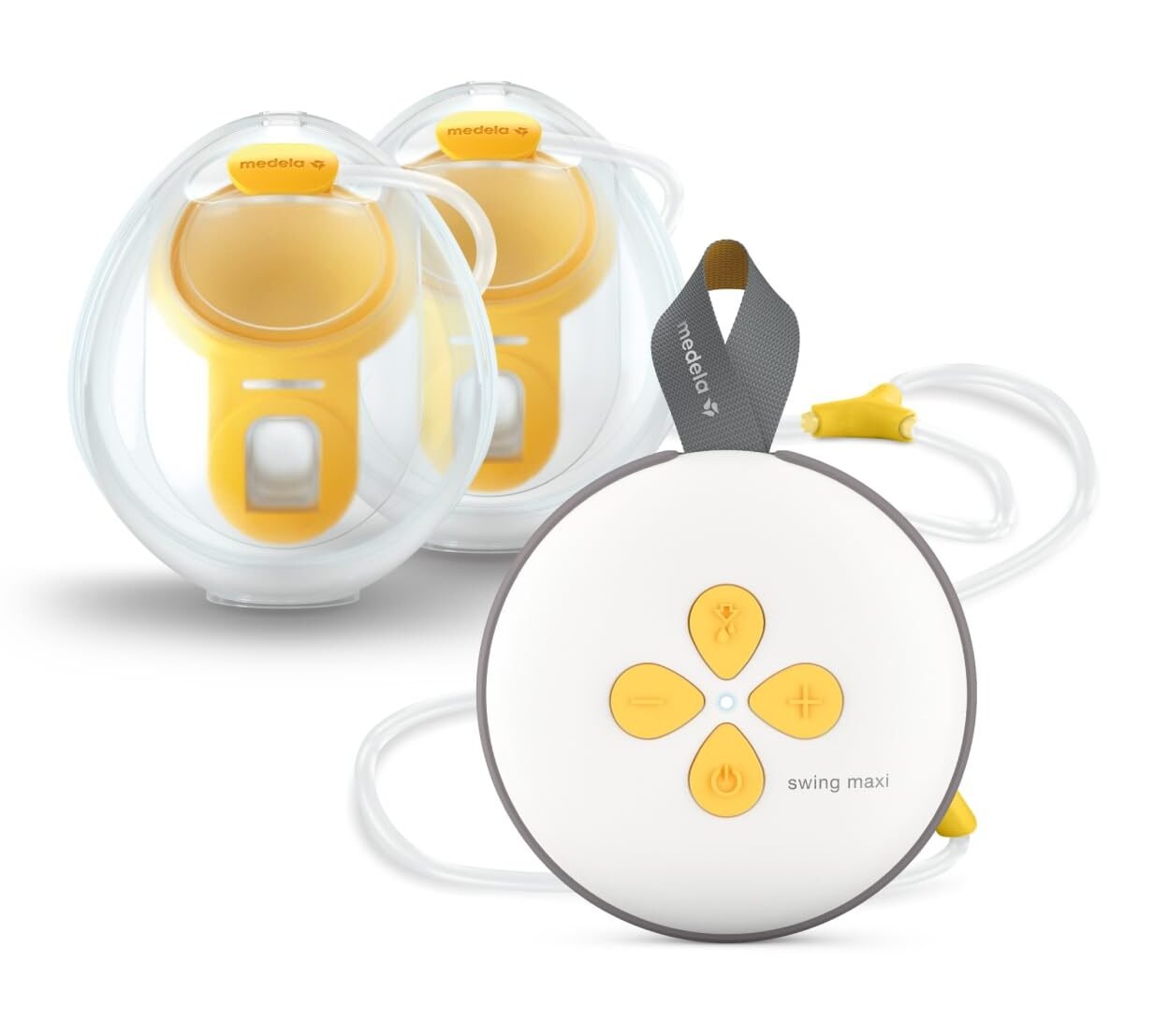
Medela is the name most maternity wards hand you a pamphlet for, and there’s a reason: its 2-Phase Expression technology — a quick “stimulation” rhythm that shifts into slower, deeper suction once milk is flowing — is one of the most-studied approaches to mimicking a baby’s natural feeding pattern. If you want the pump with the longest clinical track record, this is it.
What you’re getting:
- True double pumping — express both sides at once, roughly halving session time versus single pumping
- PersonalFit Flex™ shields that adjust angle and pressure, which matters more than almost any other spec (see our flange-fit note below)
- Medela app integration to log sessions and track output over time
- USB-rechargeable battery for cord-free use
Our opinion: this is the pump we’d recommend to a mom who wants the “safe, boring, proven” choice — no surprises, replacement parts sold everywhere, and a brand nearly every hospital and pediatrician’s office already recognizes.
Replacement parts run slightly pricier than off-brand alternatives, and it’s not fully hands-free — you’ll still want a pumping bra if you want to multitask.
Elvie Pump — Best Wearable, Hands-Free Pump
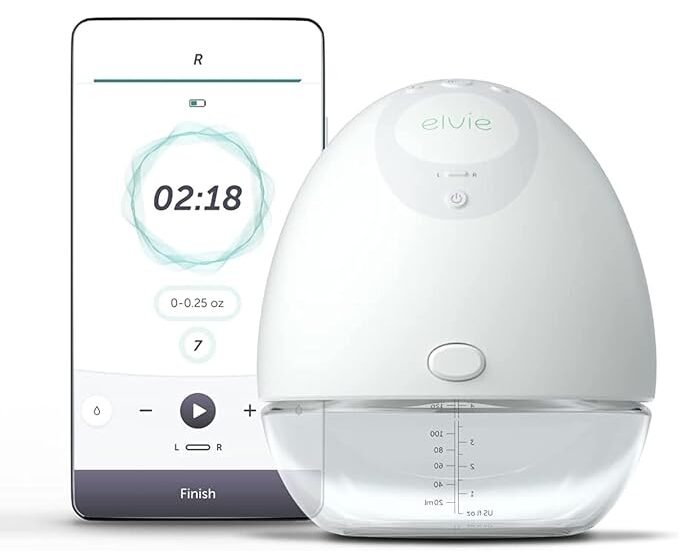
This is the pump that made “pumping at your desk without anyone noticing” an actual possibility. No tubes, no external bottles, no motor sitting on the table — the entire unit sits inside your nursing bra. It uses Piezo disc technology instead of a traditional motor, which is part of why it’s quiet enough to have earned Quiet Mark certification.
Standout features:
- Fully wearable, tube-free design — pump while driving, in a meeting, or chasing a toddler
- Bluetooth app control — adjust suction and watch estimated output from your phone
- ~2.5 hours of battery, good for 5–6 sessions between charges
- Multiple SmartRhythm™ suction patterns for different let-down speeds
Our take: if your budget stretches this far, we think it’s worth it. The freedom of not being tethered to anything is the single biggest quality-of-life upgrade in this whole category — and for working moms, that can be the difference between keeping up a pumping schedule and quietly giving up on it.
The catch: it’s the priciest pump here, suction is a step below hospital-grade pumps, and milk capacity per cup is smaller — so you may empty and reattach cups more often during a heavy session.
Momcozy M5 — Best Budget Wearable Pump
Momcozy built its reputation by asking a simple question: what if a wearable pump didn’t cost $300? The M5 borrows the hands-free, in-bra format that made premium wearables popular, then strips the price down without gutting the suction power.
What impressed us:
- Hospital-grade suction claims backed by multiple adjustable intensity levels — not a single fixed setting
- Stimulation + expression modes that mirror a baby’s natural nursing rhythm
- Multiple flange size options, which — again — matters more than almost anything else on this list
- USB charging from a wall plug, laptop, power bank, or car — genuinely convenient for travel
Our opinion: this is the pump we’d suggest to a first-time mom who isn’t sure yet whether she’ll pump long-term. It won’t fully replace a hospital-grade desktop pump for exclusive pumpers, but for daily use it punches well above its price.
It has a smaller collection capacity and lacks the more polished app ecosystem of premium wearables — acceptable trade-offs at this price.
Philips Avent Double Electric — Best for Comfort
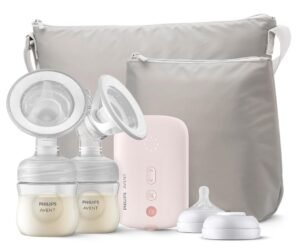
If a previous pump has ever left you wincing, this is the one to try next. Philips built the Avent around a soft silicone cushion and its Natural Motion Technology, engineering the whole session to feel less like suction and more like an actual latch.
Why moms with sensitivity issues gravitate here:
- Soft-flex silicone cushion that adapts to different breast shapes instead of forcing one mold
- Gradual stimulation-to-expression transition designed to feel less abrupt
- Double pumping to cut session time in half
- Simple disassembly — fewer fiddly parts than most double pumps
Our take: we’d steer any mom who’s said “pumping hurts” toward this one before assuming she just needs to tolerate more suction. Pain usually means fit or settings, not a mom doing something wrong — and this pump is built to be forgiving on both fronts.
It doesn’t deliver the strongest possible suction for exclusive pumpers chasing every last ounce, and it needs a power source nearby.
Lansinoh SmartPump 3.0 — Best Value
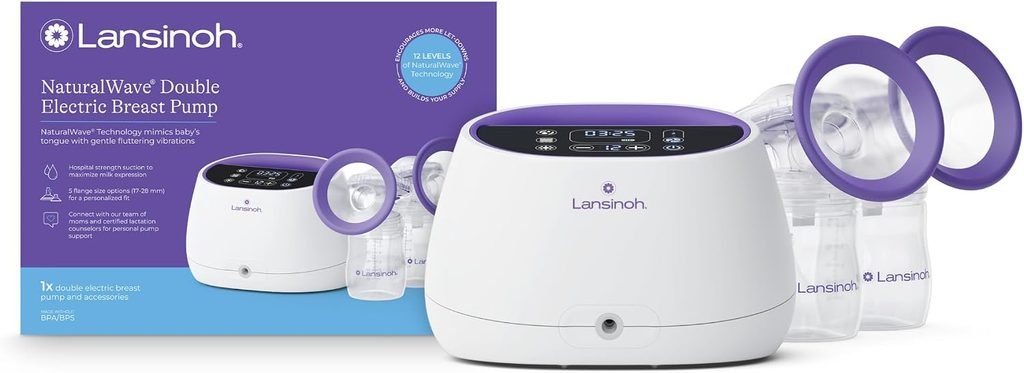
This is the pump for moms doing the mental math of “do I really need to spend that much?” The SmartPump 3.0 covers double pumping, app connectivity, and adjustable programs — the features that used to only show up on premium models — at the lowest price on this list.
Where it earns its keep:
- Double electric pumping with customizable suction patterns
- Lansinoh Baby app for tracking sessions and building a routine
- Compact, lightweight build that’s easy to move between rooms or take to work
- Closed hygienic system to keep milk out of the motor
Our opinion: value-for-money, this is our pick. You’re not sacrificing much compared to pricier pumps — mostly some suction ceiling and a slightly less refined app.
It’s not as compact as a wearable and, like the Medela and Philips options, needs more parts washed than a manual pump.
How to Choose: The One Thing That Matters More Than the Pump
Before you compare specs, check flange size. A flange that’s too tight or too loose is the single most common reason pumping hurts or output feels disappointing — regardless of how “powerful” the pump is. Most pumps ship with one or two standard sizes, but nipple diameter varies more than people expect, and several pumps on this list (Medela, Momcozy) sell additional flange sizes separately.
A quick rule of thumb: your nipple should move freely in the tunnel during suction, without the areola being pulled in too far. If a session is painful past the first few seconds, size — not suction strength — is usually the first thing to check.
Why Trust This List
Health guidance is clear that consistency matters more than which pump you own. The CDC notes that pumping as often as your baby normally feeds helps your body keep pace with demand, and recommends every breastfeeding mother learn hand expression as a backup for when a pump isn’t available. The Office on Women’s Health gives similar guidance on building and maintaining supply through regular removal.
Pump hygiene deserves the same attention as the pump itself: parts should be washed thoroughly after every session, since refrigeration alone won’t stop bacteria from growing on pump components.
And if you’re worried about low supply — pause before assuming the worst. Many moms who think they’re under-producing are actually making a normal amount, and the research is consistent that frequent removal of milk (nursing or pumping) is what protects supply, not the horsepower of your pump. If fit or output is a real concern, a lactation consultant can check your flange size in minutes — often solving what a “better” pump never would.
Sources: CDC: Pumping Breast Milk · CDC: How to Clean and Sanitize Breast Pumps · Office on Women’s Health: Pumping and Storing Breast Milk
FAQ
Is a more expensive pump always more effective? No. Price mostly buys portability, app features, and hands-free design — not necessarily more milk. A well-fitted flange on a budget pump usually outperforms a poorly-fitted flange on an expensive one.
How often should I replace pump parts? Check the manufacturer’s guidance for valves and membranes specifically — these wear out faster than tubing or bottles and directly affect suction if they degrade.
Can I use a wearable pump as my only pump? Many moms do, but wearables generally have a lower suction ceiling than hospital-grade or desktop double pumps. If you’re exclusively pumping, consider keeping a stronger backup pump for sessions where output really matters (like overnight or after a missed session).
Keep Building Your Feeding Kit
Once your pump is sorted, a few more pieces make the whole routine easier:
- Best Breast Milk Storage Bags — so that freezer stash doesn’t leak or get lost
- Best Baby Bottle Warmer — for turning stored milk into a ready bottle fast
- Best Nursing Bras — hands-free pumping only works with the right bra underneath
- Baby Bottle Sterilizer Guide — keep every pump part and bottle properly clean
Written by Fran & Fabio, founders of New Mom Choice. Fran is a dentist. Fabio is a retired agricultural pilot. Together, they research and fact-check every guide on this site against trusted medical sources — including the AAP and WHO — before it goes live.