
For informational purposes only — not medical advice. See our Medical & Health Disclaimer.
Learning how to transition from swaddle to sleep sack can feel intimidating, especially if the swaddle is the one thing keeping your baby asleep right now. Maybe your baby just rolled for the first time, and panic set in immediately. Take a breath. This switch is manageable, and most babies adjust faster than parents expect.
This transition is one piece of the bigger sleep picture — our Baby Sleep Guide covers everything from schedules to safe sleep as your baby grows.
Quick Recap: Why This Switch Matters
If your baby has started rolling, wiggling free, or pushing up during tummy time, it’s time to stop swaddling. Our guide on when to stop swaddling your baby covers those specific signs in detail.
According to HealthyChildren.org, the American Academy of Pediatrics (AAP) notes that swaddling can lower a baby’s ability to rouse themselves during sleep, which is one reason it needs to stop once rolling begins. A sleep sack keeps your baby warm without restricting their arms, so it’s the safer option from that point on.
While researching how to transition from swaddle to sleep sack for this guide, we read through the AAP’s actual swaddling safety page rather than relying on secondhand summaries. The arousal point above surprised us; it’s a bigger part of the “why” than most articles mention.
Choose the Right Sleep Sack First
Not all sleep sacks are the same, so a little research helps before you start the transition. Look for the correct size for your baby’s weight, along with a TOG rating suited to your room temperature.
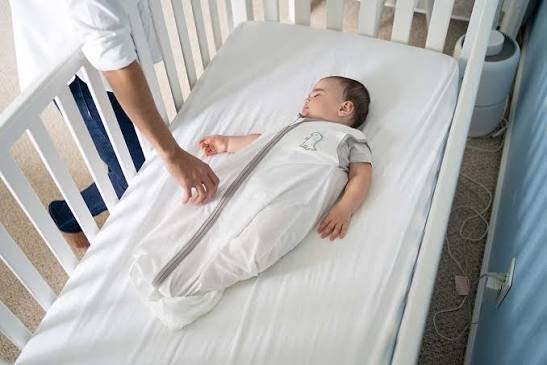
The AAP considers wearable blankets a safer alternative to loose blankets in the crib. Choosing a well-fitted sack supports both warmth and safety at once, and it makes the whole transition smoother from night one.
Step-by-Step Timeline: From Swaddle to Sleep Sack
Here’s a realistic timeline for how to transition from swaddle to sleep sack, whichever method you pick below.
Days 1–2: Prep and Pick Your Method
Buy or size up your sleep sack first, so it’s ready before bedtime. Decide between the gradual approach or the direct switch, based on how attached your baby seems to the swaddle.
Days 3–5: Start the Switch
If you’re going gradual, free one arm for these first nights. If you’re going direct, place your baby in the sleep sack tonight and keep every other part of the routine the same.
Days 6–10: Expect Some Bumps
Lighter sleep and more frequent wakings are common during this window. This is normal, not a sign you’re doing it wrong; most babies need about a week to adjust to the new sensation.
Days 11–14: Naps Start Catching Up
Nights usually settle before naps do. By the end of week two, most families notice naps stretching back out and night wakings easing off.
Week 3 and Beyond: New Normal
By now, the sleep sack should feel routine rather than disruptive. If sleep is still noticeably worse than before the switch, move to the Troubleshooting section below.
Method One: The Gradual “One Arm Out” Approach
This method is one of the gentlest ways to handle how to transition from swaddle to sleep sack, since it eases babies into the change slowly. Start by swaddling with one arm free for two or three nights.
Next, free both arms while keeping the lower body swaddled for a few more nights. Finally, switch to the sleep sack completely once your baby seems comfortable with both arms loose.
Method Two: The Direct Switch
Some babies adjust just fine with a straightforward switch. This works especially well for babies who weren’t strongly attached to swaddling in the first place.
Simply place your baby in the sleep sack at the next nap or bedtime, and follow your usual routine. If sleep worsens significantly after a few days, switching to the gradual method instead often helps.
Timing the Transition Well
Whenever possible, avoid starting this switch during a growth spurt, travel, or the 4-month sleep regression. Layering too many changes together tends to backfire.
However, if rolling has already started, safety comes first regardless of timing. In that case, our guide on how to help with 4-month sleep regression can help you manage both changes at once.
Troubleshooting Common Setbacks
Even with good timing, this transition doesn’t always go smoothly. Here’s how to handle the most common snags.
Baby wakes up startled every time you lay them down. Try a firm, gentle hand on the chest for a few seconds after laying them down, mimicking swaddle pressure without restricting movement.
Baby fights the sleep sack itself. Double-check the fit first; a sack that’s too loose can feel unfamiliar and floppy. Sizing up or down by one step sometimes solves this instantly.
Naps are still short after two weeks. This is common, since naps typically lag behind nighttime progress. Watching wake windows closely during this stretch can help shorten the adjustment.
Baby seems more fussy than usual overall. Rule out overtiredness first. Our guide on overtired newborn signs and what to do can help you tell the difference between adjustment fussiness and something else.
It’s been three weeks and nothing has improved. At this point, it’s worth checking in with your pediatrician, since ongoing sleep disruption can sometimes point to something unrelated to the sleep sack itself.
Helping Your Baby Feel Secure
A firm, gentle hand on your baby’s chest at bedtime can mimic swaddle pressure without restricting movement. White noise and dim lighting help too, since familiar cues offer comfort during change.
Keep your usual bedtime steps exactly the same otherwise. Consistency matters more than ever during this particular shift.
Sizing Up as Your Baby Grows
Once your baby is confidently rolling both ways, their sleep sack needs may shift again. Our sleep sack for rolling baby guide covers safe options designed specifically for this more mobile stage, and our best sleep sack for babies comparison can help if you’re shopping around.
Regularly checking fit matters too, since a sack that’s too loose or tight can affect both comfort and safety.
Safety Basics That Still Apply
Regardless of which sleep sack you choose, core safe sleep rules stay the same throughout this transition. Always place your baby on their back to start sleep, on a firm surface, free of loose bedding.
Our safe sleep for newborns guide covers every essential in full, built around the AAP’s 2022 recommendations. The World Health Organization also recommends 12 to 17 hours of quality sleep a day for babies under one, depending on age, which is worth keeping in mind if disrupted sleep during this switch has you worried your baby isn’t getting enough.
One thing that became obvious once we’d fact-checked several sleep sack transitions against parent forums and pediatric sources: the habit itself becomes automatic well before the “adjustment period” officially ends. Most families stop thinking about it entirely by week three, even if the timeline above still shows week two as bumpy on paper.
When to Reach Out to Your Pediatrician
Every baby adjusts to this switch differently, and some take longer than others. If sleep disruption continues for several weeks, or you have concerns about your baby’s comfort or development, please talk with your pediatrician.
They can offer guidance specific to your baby’s situation, which matters more than any general timeline, including the one in this guide.
This Transition Won’t Last Forever
Right now, the change might feel disruptive, but most babies settle into their new sleep sack within a couple of weeks. If you’ve been searching how to transition from swaddle to sleep sack because tonight feels impossible, know that patience and consistency really do pay off here.
For sleep sack recommendations and other essentials for this stage, check out our best baby products roundup, chosen with comfort and safety both in mind.
Related Sleep Guides
- When to Stop Swaddling Your Baby
- Best Sleep Sack for Babies
- Safe Sleep for Newborns
- Baby Sleep Guide — the full hub for schedules, regressions, and safe sleep
- Newborn Nap Schedule
Sources:
- American Academy of Pediatrics, HealthyChildren.org
- World Health Organization, Guidelines on Physical Activity, Sedentary Behaviour and Sleep for Children Under 5
Written by Fran & Fabio, founders of New Mom Choice. Fran is a dentist. Fabio is a retired agricultural pilot. Together, they research and fact-check every guide on this site against trusted medical sources — including the AAP and WHO — before it goes live.
Last reviewed: September 2026