
For informational purposes only — not medical advice. See our Medical & Health Disclaimer.
It’s 2 a.m., your baby finally settled, and your phone is glowing in your hand. You search “screen exposure risks for babies” half out of guilt, half out of real worry. So many new moms end up right here. Maybe you wonder if five quiet minutes of a video is doing harm. Or maybe you wonder if you’re overthinking it completely.
Here’s the short answer. A little screen time won’t undo your good parenting. But knowing the real risks, and the real guidelines, helps you make calm choices instead of guilty ones.
Why This Question Follows New Moms Everywhere
Screens are not optional in modern life. They’re in your pocket, on your counter, playing in the background at the pediatrician’s office. So it makes sense that screen exposure risks feel impossible to avoid completely.
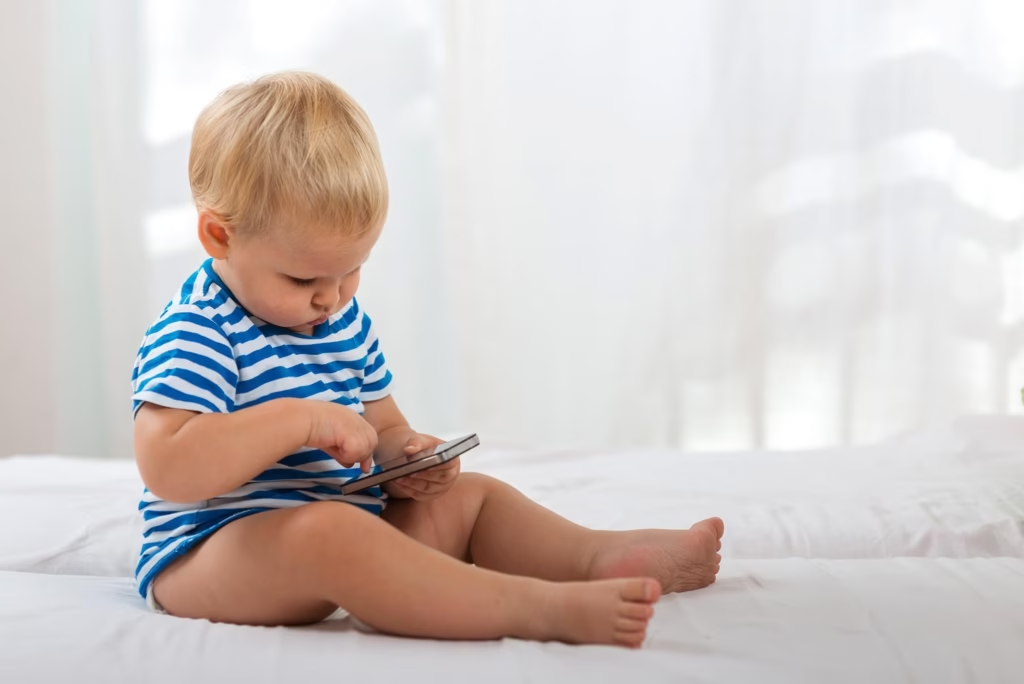
Still, there’s a real difference between a screen playing nearby and a baby actively watching one. That distinction matters more than most parents realize, and it’s where the actual research focuses.
What the Experts Actually Say About Screen Exposure Risks
According to the American Academy of Pediatrics (AAP), infants under 18 months learn best through real-world interaction, not screens. Heavy solo screen use at this age has been linked to delays in language, thinking, and social skills, i high screen exposure risks. The one exception is video chatting with a loved one, since that’s a two-way connection, not passive watching.
The World Health Organization (WHO) takes an even firmer stance. Their guidelines recommend zero screen time for babies under one year old, including background TV. After that, they suggest keeping sedentary screen time low and prioritizing movement, play, and sleep instead.
Neither organization is trying to scare you. They’re simply pointing at what young brains need most right now: your voice, your face, and real objects to touch.
The Real Screen Exposure Risks Worth Knowing
So what actually happens with too much early screen time? A few patterns show up again and again in the research.
Language delays. Babies learn words through back-and-forth exchanges, not one-way audio. A screen can’t respond to a baby’s babble the way you can.
Disrupted sleep. Screens close to bedtime can make it harder for a baby to wind down. That’s true because of the light, and because of the stimulation too.
Less hands-on learning. Time spent watching is time not spent grabbing, stacking, or exploring. That hands-on play is exactly how infant brains build connections.
A habit that’s hard to unwind later. Early screen habits tend to stick. What starts as five calming minutes can quietly grow as your baby gets older.
None of this means one video ruins anything. It just means the pattern matters more than any single moment.
Why So Many Parents Reach for a Screen Anyway
Let’s be honest about this part too, because guilt doesn’t help anyone. Nearly half of parents say they use screens sometimes just to get through a hard moment. Think of a meltdown in a waiting room, or a desperately needed shower.
That’s not a failure. That’s survival. If you’ve done this, you’re in good company, not doing something wrong.
That said, a screen shouldn’t be your only tool. If it’s become your first move every time your baby is fussy, a few backups can help. Our guide on comforting a crying baby covers calming techniques that skip the screen entirely, for moments when you’d rather reach for something else.
Building Screen Habits That Actually Work Long-Term
You don’t need a perfect household to protect your baby from unnecessary screen exposure risks. You need a few honest habits you can actually keep.
Keep video chatting separate from other screen time. Calls with grandma don’t count against the guidelines, so don’t feel guilty about those.
Watch together when you can. Sitting with your baby and talking about what you’re seeing turns passive watching into something more interactive.
Protect the hour before bed. Keeping screens off in that window supports better sleep for both of you, not just your baby.
Let background noise be background noise. A TV playing quietly in another room still counts as exposure, even if nobody’s technically watching.
If you’re building your baby’s early routines more broadly, our newborn care guide walks through the basics beyond just screens. Small choices around sleep tend to connect closely with screen habits too.
You Have More Time Than It Feels Like
Right now, your baby can’t hold a tablet, let alone ask for one. That means you have time. Time to build habits before screens are even part of the conversation. Time to decide what feels right for your family, without pressure or panic.
The parents who feel calmest about this later are rarely the ones who avoided screens exposure risks perfectly. They’re the ones who understood the real screen exposure risks early, and built small, sustainable habits instead of chasing an impossible zero.
You’re already doing that, just by reading this.
A gentle reminder: every baby develops differently, and this guide is meant to inform, not diagnose. If you notice signs of developmental delay, or you have specific concerns about your baby’s behavior around screens, talk with your pediatrician. They know your baby best.
About the author: The NewMomChoice team researches and curates parenting content, checking it against guidance from sources like the AAP and WHO. We’re not doctors ourselves, which is exactly why we link out to the people who are.
Sources:
- American Academy of Pediatrics (via HealthyChildren.org) — Helping Kids Thrive in a Digital World
- World Health Organization — Guidelines on Physical Activity, Sedentary Behaviour and Sleep for Children Under 5
Written by Fran & Fabio, founders of New Mom Choice. Fran is a dentist. Fabio is a retired agricultural pilot. Together, they research and fact-check every guide on this site against trusted medical sources — including the AAP and WHO — before it goes live.