
For informational purposes only — not medical advice. See our Medical & Health Disclaimer.
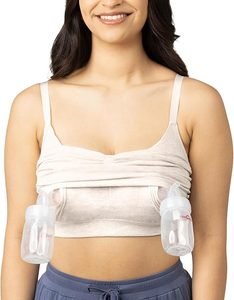
This pumping handbook is its own discipline entirely — part physiology, part logistics, part sheer stubbornness at 4 a.m. when the last thing your body wants to do is sit attached to a machine. Whether you’re pumping to build a freezer stash, to feed a baby who can’t yet latch, to return to work, or because exclusive pumping is simply the path that fits your life — the mechanics deserve real respect.
The Rule That Changes Everything: Flange Fit
If pumping hurts, the near-universal first culprit is flange size — not your body, not your pain tolerance, not “just how pumping is.” A properly fitted flange allows your nipple to move freely in the tunnel without excessive rubbing, while your areola stays mostly outside it. When the flange is too large, excess tissue gets pulled in with the nipple, spreading suction across a wider area, reducing how effectively the ducts are stimulated — which can mean both pain and a slow, mysterious decline in your output that has nothing to do with your body’s actual capacity. Lactation professionals increasingly point to this as one of the single most overlooked variables in a mother’s entire pumping experience.
The golden rule, repeated by lactation consultants everywhere: no pain, more gain. Comfortable pumping produces more milk than painful pumping — pain triggers a stress response that can actually inhibit your milk-ejection reflex. If you’re gritting your teeth through every session, that’s not dedication. That’s a sizing problem worth solving, ideally with an IBCLC who can walk you through proper measurement rather than guesswork.
Building and Maintaining Supply
Milk production runs on a straightforward biological principle — supply and demand. More consistent removal signals your body to produce more; irregular or skipped sessions send the opposite signal. A general framework, adjustable to your specific goals:
- Exclusive pumping, first 6 weeks: roughly every 2–3 hours, 8–10 times daily, including overnight
- 6 weeks to 3 months: stretching toward every 3 hours, 6–8 times daily
- Established supply (typically 6–12 weeks postpartum): many mothers find their body regulates, needing less frequent pumping to maintain the same output
Power pumping — a technique mimicking a baby’s natural cluster-feeding pattern (roughly 20 minutes pumping, 10 resting, 10 pumping, 10 resting, 10 pumping) done once daily — is commonly recommended by lactation professionals for a genuine supply boost, particularly during a growth spurt or a dip that has you worried.
Double pumping (both breasts simultaneously) isn’t just a time-saver — it triggers a stronger protactinium release than single pumping, meaningfully supporting supply over time. If you’re a working mother pumping on a schedule not of your own choosing, this matters more than it might seem.
We select the best electric breast pumps to help you to choose one.
Managing Sore, Cracked, or “Elastic” Nipples
Overstretched, elongated, or visibly misshapen nipples after a pumping session are one of the clearest signs the flange is too large or the suction is set too high — not a sign of a fragile or inadequate body. A few concrete steps:
- Re-check flange fit before anything else — sizing can genuinely change over the course of your feeding journey, sometimes within just weeks of starting
- Lower the suction intensity; higher isn’t more effective, it’s often just more damaging
- Apply a small amount of purified lanolin or your own expressed milk to nipples after pumping, and allow them to air-dry rather than immediately covering them
- If cracking, bleeding, or persistent pain continues beyond simple adjustments, this warrants a conversation with an IBCLC or your provider — it can be a sign of shallow latch during direct feeds, a tongue-tie in baby, or a treatable skin issue like thrush
Storage, So the Work You’ve Done Is Protected
- Room temperature (below 77°F / 25°C): up to 4 hours
- Refrigerated (39°F / 4°C): 3–5 days
- Frozen (0°F / -18°C): 6–12 months
Every ounce you pump represents real time, real discomfort, real effort — knowing it’s stored safely is its own form of peace of mind. Check our milk storage bag guide for more information
Written by Fran & Fabio, founders of New Mom Choice. Fran is a dentist. Fabio is a retired agricultural pilot. Together, they research and fact-check every guide on this site against trusted medical sources — including the AAP and WHO — before it goes live.