For informational purposes only — not medical advice. See our Medical & Health Disclaimer.
We know that new-mom feeling. You walk into the nursery, look at your sleeping baby, and suddenly wonder what’s actually floating in that air. Dust. Pollen. Maybe smoke from last summer’s wildfires. It’s a lot to think about, and you’re already exhausted — which is exactly why we rounded up the best air purifiers so you don’t have to dig through it all yourself.
So let’s make this easy. We spent hours comparing air purifiers built for nurseries, and we narrowed it down to five that we genuinely trust. Below, we’ll walk you through each one, plus what actually matters when you’re choosing. No fluff, no jargon, just straight talk from one parent to another.
Why This Actually Matters
Babies breathe faster than we do. They also spend most of their first year indoors, tucked into one small room. That combination means nursery air quality carries real weight.
The American Academy of Pediatrics points out that indoor air has an outsized effect on a child’s health, since most of us spend the bulk of our time inside. The EPA agrees that a good HEPA purifier can meaningfully reduce fine particles in a room. It won’t replace fresh air or fixing the actual source of a problem, but it’s a smart layer of protection.
One thing we always flag: skip anything with an “ionizer” feature unless it has a genuine off switch. Ionizers can release ozone, which irritates developing lungs. Every pick below is either ozone-free by design or lets you switch that feature off completely.
What We Looked For
We didn’t just pick popular brands and call it a day. Every purifier on this list had to clear a few non-negotiables first.
- True HEPA filtration. Not “HEPA-type” or “HEPA-like.” Those are marketing words, and they don’t mean much.
- A real sleep mode. If it’s too loud to run overnight, it’s not doing its job.
- Ozone-free operation, or an ionizer you can turn off for good.
- Sensible filter costs. A cheap machine with pricey replacement filters usually ends up in a closet.
With that in mind, here’s what actually made the cut.
Comparison Table
| Purifier | Best For | Filtration | Ionizer | Sleep Mode | Extra Features |
|---|---|---|---|---|---|
| Levoit Core 300S | Best overall pick | 3-stage True HEPA | None | Yes, light off + whisper-quiet fan | App connectivity for remote air quality checks |
| Coway Airmega AP-1512HH Mighty | Bigger rooms | True HEPA | Optional, off by default | Yes | Larger coverage area, soft night light |
| Levoit Baby-Specific Purifier | All-in-one nursery setup | True HEPA | None | Yes | Built-in blue-light-free night light and white noise machine, AHAM verified |
| Winix 5520 | Best value for larger bedrooms | True HEPA | Yes (PlasmaWave, switchable off) | Yes | AHAM verified, Energy Star certified, air quality light indicator |
| Blueair Blue Pure 311 | Compact & budget-friendly | True HEPA | None | Simple controls | Small footprint, easy 3 a.m. operation |
This post contains Amazon affiliate links. We may earn a small commission if you purchase through them, at no extra cost to you. See our Affiliate Disclosure.
The Best Air Purifiers: Our Top Picks
Levoit Core 300S — Best Overall Pick
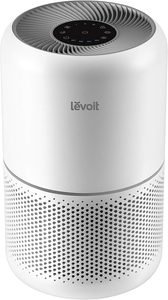
This is the one we’d recommend to most new parents, hands down. It’s compact, it’s quiet, and it runs on a genuine 3-stage True HEPA filter rather than a vague knockoff version.
Its dedicated sleep mode turns off every light and drops the fan to a whisper. That means you can run it right next to the crib without worrying about waking anyone up. It also connects to an app, so you can check air quality from the couch instead of tiptoeing into the room.
There’s no ionizer here at all, which sidesteps the ozone question entirely. Filters need swapping every six to eight months, so that’s worth budgeting for. Still, if you only trust one recommendation on this page, we think this is it.
Coway Airmega AP-1512HH Mighty — Best for Bigger Rooms
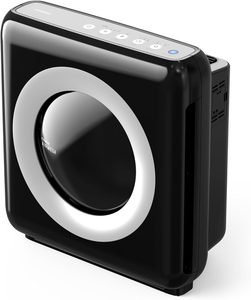
If your nursery doubles as a guest room or shares space with older siblings, this one earns its keep. It covers noticeably more square footage than compact nursery units, so it doesn’t struggle in a larger space.
It does include an optional ionizer, but it’s off by default. Just leave it that way, and you’ve got a quiet, reliable machine. Plenty of parents also mention its soft night light, which can replace a separate one altogether.
Because of its size, it’s a better fit for bigger bedrooms than tiny nurseries. But if square footage is your main concern, this purifier handles it beautifully.
Levoit Baby-Specific Purifier with Night Light & Sound Machine — Best All-in-One
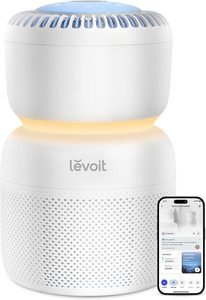
This model was actually built with nurseries in mind, not adapted from a general living-room design. It bundles a True HEPA filter, a blue-light-free night light, and a white noise machine into one unit.
That combination is genuinely clever. Instead of three separate gadgets cluttering the nursery, you get one that handles air quality, soothing sound, and gentle light together. It’s AHAM verified too, meaning an outside group actually tested its performance claims.
Because it does more, it’s a slightly bigger investment upfront. However, if you’re setting up a nursery from scratch, consolidating gadgets is often worth it.
Winix 5520 — Best Value for Larger Bedrooms
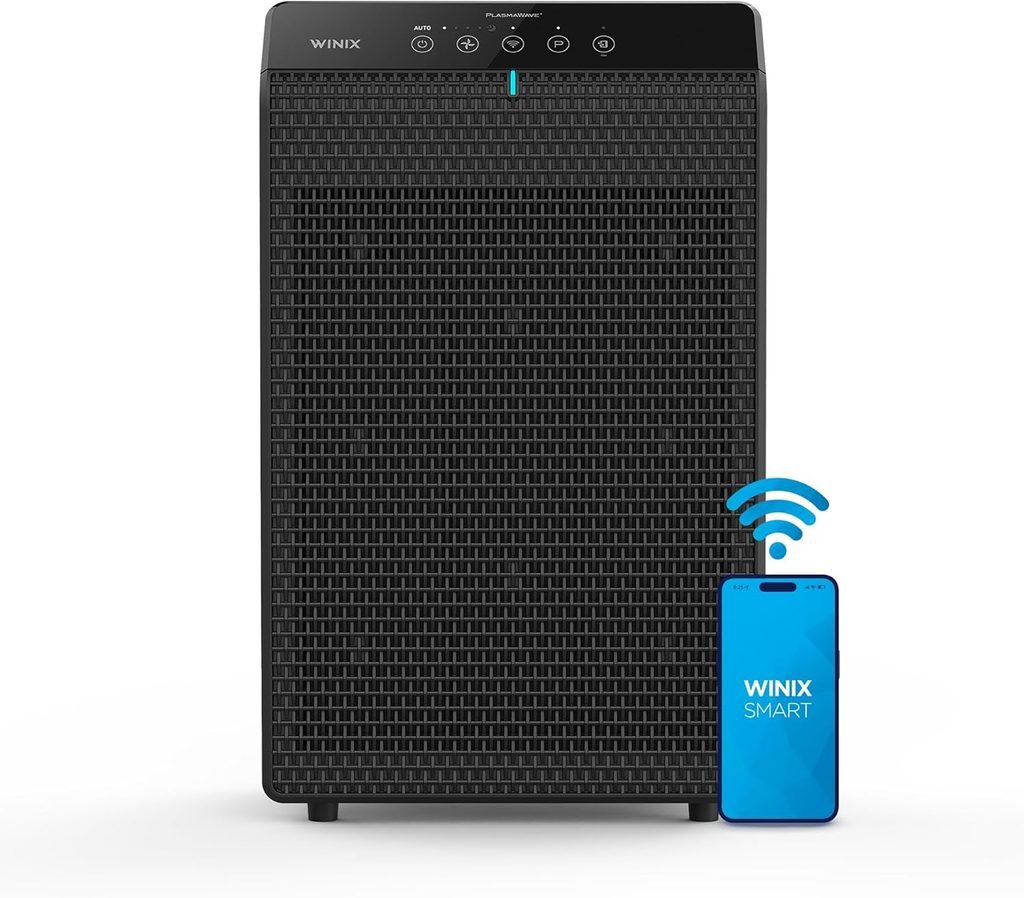
This purifier punches above its size. Independent testing backs up its performance claims, and it’s both AHAM verified and Energy Star certified.
It includes an ionizer feature called PlasmaWave, but it switches off completely, and Winix keeps it within safe limits when it’s on. There’s also a proper sleep mode and a color-coded light that shows current air quality at a glance.
One small catch: if the power goes out, the unit resets, and that ionizer toggle can silently flip back on. So it’s worth double-checking the setting after any outage, just to be safe.
Blueair Blue Pure 311 — Best Compact & Budget-Friendly Option
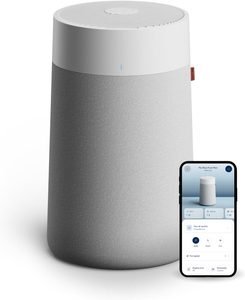
Sometimes you just need something small, simple, and effective. This purifier is tiny enough to tuck into a corner, yet it still uses genuine HEPA filtration to capture dust, pollen, and pet dander.
It has no ionizer whatsoever, so there’s nothing to second-guess or switch off. The controls are refreshingly simple too, which matters a lot at 3 a.m. when you’re running on no sleep.
Because it’s compact, it suits smaller nurseries better than large, open rooms. For a first purifier, though, it’s a genuinely solid and low-stress choice.
So, Which One Should You Choose?
Here’s our honest take. For most standard nurseries, the Levoit Core 300S is the safest bet. If you need more coverage, go with the Coway Airmega. Want fewer gadgets cluttering your space? The all-in-one Levoit baby purifier handles that beautifully.
Whichever one you pick, remember this: a purifier is a helpful tool, not a medical device. If your baby has a health condition, always check with your pediatrician first. We’re parents and researchers, not doctors, and every guide on this site gets checked against trusted sources like the AAP and WHO before we publish it.
You’re doing a good job. One clean, quiet nursery upgrade at a time.
Speaking of nursery upgrades, dry winter air can be just as rough on tiny lungs as dust and allergens. If you’re curious whether a humidifier belongs in the room too, our guide to the best baby humidifiers walks through exactly what to look for.
FAQ
Is it safe to run an air purifier in my baby’s nursery overnight? Yes, as long as it has a genuine sleep mode with a quiet fan and no glowing lights that could disrupt sleep. All five picks above are designed to run safely overnight.
Do air purifiers with ionizers produce ozone? Some can, which is why it’s worth choosing a model that’s ozone-free by design or has an ionizer you can switch off completely. The Coway and Winix models include an ionizer feature, but both let you disable it.
How often do I need to replace the filter? It varies by model, but most True HEPA filters need replacing every six to eight months with regular use. Check the manufacturer’s guidance for the specific unit you choose.
Can an air purifier replace a humidifier in the nursery? No — they solve different problems. A purifier removes particles like dust and pollen from the air, while a humidifier adds moisture. Many nurseries benefit from both, especially in dry winter months.
Is “HEPA-type” the same as “True HEPA”? No. True HEPA filters meet a specific, tested standard for capturing tiny particles. “HEPA-type” or “HEPA-like” are marketing terms that don’t guarantee the same performance.
Should I check with my pediatrician before using a purifier? If your baby has a respiratory condition or other health concern, yes. A purifier is a helpful tool, not a medical device or treatment.
Written by Fran & Fabio, founders of New Mom Choice. Fran is a dentist. Fabio is a retired agricultural pilot. Together, they research and fact-check every guide on this site against trusted medical sources — including the AAP and WHO — before it goes live.