For informational purposes only — not medical advice. See our Medical & Health Disclaimer.
Safe sleep for newborns is probably one of the first things that kept you up at night, long before your baby even arrived. Between conflicting advice from relatives, Pinterest nursery photos, and scary headlines, it’s easy to feel overwhelmed. Take a breath. The real guidelines are simple, and once you know them, safe sleep becomes second nature fast.
Quick Answer: The ABC Rule
Before the details, here’s the short version. Your baby should sleep:
- Alone, on their own sleep surface
- Back, for every nap and every night
- Crib or bassinet, with nothing else inside it
That’s it. Everything below simply explains the “why” behind each letter, plus a few extra details worth knowing.
Safe Sleep for Newborns: Why the Guidelines Matter So Much
These guidelines exist to lower the risk of Sudden Infant Death Syndrome, often shortened to SIDS. Even though the topic feels frightening, the steps to reduce risk are well researched and genuinely manageable.
The American Academy of Pediatrics (AAP) updated its safe sleep policy in 2022, and it remains the leading US reference on this topic. Following it consistently is one of the most protective things you can do during your baby’s first year.
Position and Surface: The Two Things That Matter Most
Always Place Baby on Their Back
Back sleeping is recommended for every nap and every night, without exception, from birth until your baby’s first birthday. The AAP notes that back sleeping does not raise choking risk, even for babies with reflux, since gravity actually works in their favor in this position.
Once your baby can roll both ways on their own, usually somewhere past four months, you can let them settle into whatever position they land in.
Use a Firm, Flat Sleep Surface
A firm mattress in a crib, bassinet, or play yard that meets current safety standards is the safest choice. According to the AAP, sleep surfaces inclined more than about 10 degrees are considered unsafe for infant sleep.
That single detail rules out most loungers, inclined sleepers, and car seats for routine sleep. Soft surfaces, like adult beds, couches, or armchairs, raise risk considerably too, so they’re worth avoiding entirely for naps and nights alike.
Keep the Sleep Space Completely Bare
This part surprises a lot of new parents. Pillows, loose blankets, bumper pads, and stuffed animals should all stay out of the crib. A fitted sheet and your baby are genuinely all that belong in there.
Instead, dress your baby in a sleep sack or wearable blanket for warmth. Our guides on when to stop swaddling and how to transition from swaddle to sleep sack walk through choosing the right option as your baby grows, and our sleep sack for rolling baby guide covers what to switch to once rolling starts.
Room-Share Without Bed-Sharing
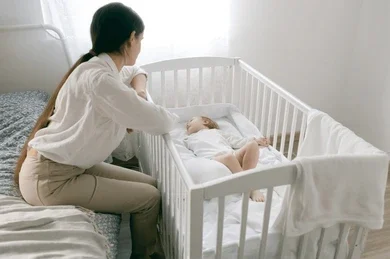
The AAP recommends room-sharing for at least the first six months, ideally closer to a year. Your baby sleeps in your room, but on their own separate, flat surface, within arm’s reach of your bed.
Research cited in the AAP’s own policy shows infants sleeping in a separate room face meaningfully higher risk than those who room-share safely. Bed-sharing, on the other hand, isn’t recommended by the AAP under any circumstances, even though many families choose it for real, understandable reasons like easier nighttime feeds.
If a couch or armchair ever becomes the accidental sleep spot, like after a long feed, move your baby to their crib or bassinet as soon as you wake up. Sofas and armchairs carry some of the highest risk of any sleep surface, so this one habit is worth building early.
What About Contact Naps?
Holding your baby for naps is common, especially in the newborn stage, and it genuinely helps with bonding. However, stay awake and alert during contact naps, and move your baby to a flat, safe surface for solo sleep whenever you can.
If contact naps feel like the only option right now, our guide on why does my newborn only sleep when held offers gentle ways to work toward more independent sleep over time.
Avoid Overheating
An overheated baby faces higher risk, so dressing appropriately matters more than it might seem. A good rule of thumb is one layer more than what feels comfortable for you.
The AAP specifically recommends layers of clothing over blankets, since loose bedding raises the risk of head covering. Keep the room at a moderate temperature, and skip hats, thick blankets, or heavy sleepwear indoors. Sweating, flushed cheeks, or damp hair are signs your baby may be too warm.
Breastfeeding and Pacifiers Offer Some Extra Protection
According to the AAP, feeding your baby human milk and offering a pacifier at sleep times are both associated with lower SIDS risk. Neither is required, though, and formula-fed babies are absolutely fine too.
If you breastfeed, the AAP suggests waiting to introduce a pacifier until breastfeeding is well established, usually a few weeks in. If you use one, avoid attaching it to clips, cords, or stuffed animals inside the crib. A plain, unattached pacifier is the safer choice.
Keep Baby’s Environment Smoke-Free
Exposure to smoke, both during pregnancy and afterward, raises SIDS risk noticeably. Keeping your home and car smoke-free protects your baby well beyond sleep safety alone.
If anyone in your household smokes, doing so outside and away from your baby offers meaningful protection.
Skip Car Seats, Swings, and Loungers for Routine Sleep
Car seats, swings, and baby loungers are fine for travel or short, supervised stretches, but they aren’t designed for regular sleep. Your baby’s position in these devices can restrict breathing over time, which is part of why the AAP’s incline rule rules them out for naps and nights.
If your baby falls asleep during a car ride, transfer them to a flat surface once you’re home. This one habit change can meaningfully reduce risk.
How Much Sleep Should a Newborn Actually Get?
Safety and quantity are two different questions, and it helps to know both. The World Health Organization (WHO) recommends 14 to 17 hours of good-quality sleep a day for babies aged 0 to 3 months, and 12 to 16 hours for babies 4 to 11 months, naps included.
That total doesn’t need to land in one stretch. For a fuller breakdown by age, our Newborn Sleep Schedule by Age guide maps out what those hours typically look like month by month.
Building Safe Sleep Into Your Daily Routine
Safe sleep works best when it’s consistent, not just occasional. Applying these rules to every nap, not only nighttime, keeps the habit strong and makes it automatic faster than you’d expect.
Practicing safe sleep for newborns at every nap, not only at bedtime, is what actually lowers risk over time. Pairing it with a steady newborn nap schedule makes the whole day feel more predictable. Watching for overtired newborn signs also helps, since an overtired baby often fights the exact routine that keeps them safest.
Parents in our community consistently tell us the habit gets easier once it’s boring. Once back-to-crib becomes as automatic as buckling a car seat, it stops feeling like a rule and starts feeling like muscle memory.
Safe Sleep During the 4-Month Sleep Regression
Around three to four months, sleep gets messier for almost every baby, and questions about safe sleep for newborns often spike right alongside it. The rules don’t change just because your baby’s sleep does. If your baby starts rolling during this stretch, that’s your cue to check our guide on when to stop swaddling.
For the bigger picture on this stage, our guides on 4-month sleep regression signs and how to help with 4-month sleep regression cover what’s normal and what tends to help, all while keeping safe sleep basics in place.
When to Talk to Your Pediatrician
Every baby is unique, and general guidelines don’t replace personalized medical advice. If your baby was born premature, has a health condition, or you have any specific safety concerns, please talk with your pediatrician directly.
They can offer guidance tailored to your baby’s individual needs, which matters more than any single article, including this one.
You’re Already Doing the Right Thing
Simply researching safe sleep for newborns shows how much you care. These guidelines might feel like a lot at first, but they become second nature with a little practice, usually within the first couple of weeks.
For a few extra safe-sleep-friendly essentials, our best sleep sack for babies comparison and best baby products roundup are both chosen with these exact guidelines in mind. You can also browse the full Baby Sleep Guide for what comes next.
Sources:
- American Academy of Pediatrics, “Sleep-Related Infant Deaths: Updated 2022 Recommendations” (Pediatrics, 2022)
- World Health Organization, Guidelines on Physical Activity, Sedentary Behaviour and Sleep for Children Under 5
- NICHD Safe to Sleep Campaign
Written by Fran & Fabio, founders of New Mom Choice. Fran is a dentist. Fabio is a retired agricultural pilot. Together, they research and fact-check every guide on this site against trusted medical sources — including the AAP and WHO — before it goes live.
Last reviewed: September 2026, by Fran & Fábio.