For informational purposes only — not medical advice. See our Medical & Health Disclaimer.
It’s 3 a.m., and you’re staring at bottle parts scattered across the counter, wondering if you scrubbed them well enough. If you’ve typed “how to sanitize baby bottles” into your phone at midnight, you already know that fear. A baby bottle sterilizer can turn that anxious ritual into a simple, five-minute habit. This guide walks you through exactly how sterilizing works, when it truly matters, and how to choose one that fits your life. Because your energy is precious, and it deserves to go toward things that actually protect your baby.
Why a Baby Bottle Sterilizer Matters So Much Right Now
A newborn’s immune system is still under construction. In the first few months, babies rely heavily on antibodies passed from you during pregnancy. Their gut lining is thinner, too, so germs your body shrugs off can hit them hard.
That’s exactly why a baby bottle sterilizer earns its spot on your counter early on. However, this intensity fades. As your baby grows stronger, so does their natural defense system.
Cleaning vs. Sanitizing: They’re Not the Same
Many parents assume washing a bottle is enough. Actually, cleaning and sanitizing do different jobs.
Cleaning removes milk residue and dirt using soap, water, and scrubbing. This step is non-negotiable after every feeding, for as long as your baby uses bottles. Sanitizing, on the other hand, goes further. It uses heat or chemicals to kill germs that scrubbing alone might leave behind.
According to the CDC, sanitizing once daily matters most when your baby is younger than two months, was born early, or has a weakened immune system. The agency notes that extra germ removal comes from sanitizing feeding items at least once a day. For older, healthy babies, thorough cleaning alone is often enough.
How a Baby Bottle Sterilizer Actually Works
There are several ways to sanitize feeding gear, and none require special skills. Here’s a quick breakdown.
Boiling. Submerge clean parts in water, boil for five minutes, then air-dry. It’s free, but it does tie you to the stove.
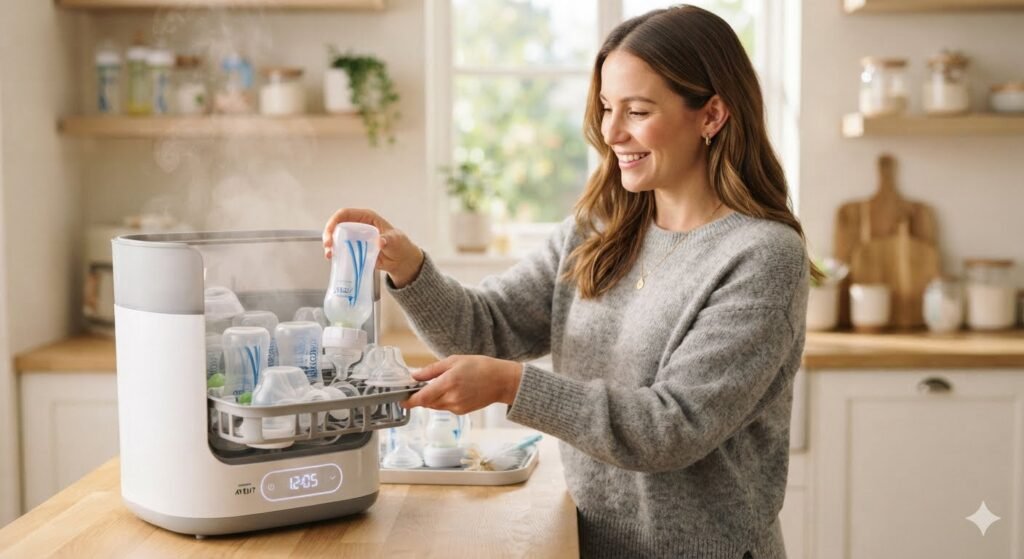
Steam sterilizers. These countertop devices sanitize multiple bottles in six to ten minutes. Consequently, they’re a favorite for exhausted parents who want a one-button solution.
UV sterilizers. These use UV-C light to damage germ DNA without heat or water. Meanwhile, placement matters, since shadowed parts may not get fully treated.
Dishwasher sanitize cycle. If your dishwasher has this setting, it can clean and sanitize in a single pass, a method backed by Michigan State University Extension‘s food-safety guidance. Therefore, you may already own everything you need.
Choosing the Right Sterilizer for Your Home
Every household is different, so the best baby bottle sterilizer really depends on your routine. Ask yourself a few honest questions first.
How many bottles do you sanitize daily? Combo-feeding or exclusive pumping often means more parts than a stovetop pot can handle. Additionally, consider your counter space; compact microwave steam bags work well in small kitchens.
Are you sanitizing pump parts often? A UV sterilizer’s speed may suit that routine better than a bulkier steam unit. Similarly, your baby’s specific health needs should guide the decision, so check with your pediatrician when unsure.
If you’re ready to compare specific models, our best baby bottle sterilizer picks for 2026 break down real options by budget and capacity.
When the Anxiety Gets Bigger Than the Task
Sterilizing can become a place where new-parent worry settles in. It feels controllable, so some moms sanitize more than needed, not because guidance calls for it, but because the ritual soothes a fear that has nowhere else to go.
That’s common, and it doesn’t mean anything is wrong with you. Still, if the worry feels heavier than the task itself, mention it to your own doctor too. Postpartum minds deserve care, just like tiny bottles do.
Building Your Full Feeding Routine
A baby bottle sterilizer is just one piece of a bigger feeding puzzle. Pair it with the right tools, and mealtime gets easier fast.
If you’re still deciding how to feed your baby, our guide on choosing your feeding path walks through breast, bottle, pump, and combo options without judgment. Pumping parents may also want our tips on breast pump comfort and safe milk storage, since sterilizing habits often overlap with pump-part care.
For the bigger picture, our full New Mom’s Ultimate Feeding Guide covers hygiene, formula, and bottle-warming together in one place. And if bottle temperature is your next worry, check our bottle warmer comparison for sleepless-night solutions.
The Bottom Line
One day, you’ll wash a bottle like any other dish and not think twice. Until then, a reliable baby bottle sterilizer buys you time, sleep, and peace of mind. Choose the method that fits your season, and trust that you’re already doing enough.
Sources: CDC – How to Clean, Sanitize, and Store Infant Feeding Items | Michigan State University Extension – Cleaning Infant Feeding Items
Written by Fran & Fabio, founders of New Mom Choice. Fran is a dentist. Fabio is a retired agricultural pilot. Together, they research and fact-check every guide on this site against trusted medical sources — including the AAP and WHO — before it goes live.