For informational purposes only — not medical advice. See our Medical & Health Disclaimer.
It’s 2 a.m., your baby is screaming, and you’re running a bottle under warm water while testing it on your wrist over and over. If you’ve typed “fastest way to warm a bottle” into your phone at midnight, you already know this exact panic. A baby bottle warmer exists to solve precisely that moment, safely and without the guesswork. This guide explains why temperature actually matters, what pediatric experts say, and how to choose the right warming method for your family. Because at 2 a.m., you deserve confidence, not more variables to manage.
Why a Baby Bottle Warmer Matters More Than It Looks
Breast milk and formula both contain heat-sensitive components. Proteins, antibodies, and enzymes can break down when milk warms too fast or too hot. Meanwhile, uneven heating creates hot spots that burn a baby’s mouth even when the outside feels fine.
The FDA explains that microwaves heat milk unevenly, creating pockets far hotter than the surrounding liquid. Consequently, pediatric guidance is firm on one point: never microwave a bottle. This isn’t fussiness. It’s protection.
Traditional Warming Methods: Familiar, but Imperfect
Running a bottle under warm tap water is the method generations of parents have used. There’s something comforting about its simplicity, honestly.
However, it carries real limits. Water baths heat milk unevenly, especially near the edges of the bottle. Additionally, you’re estimating temperature by feel alone, and at 3 a.m., estimating is exactly what tired brains do worst.
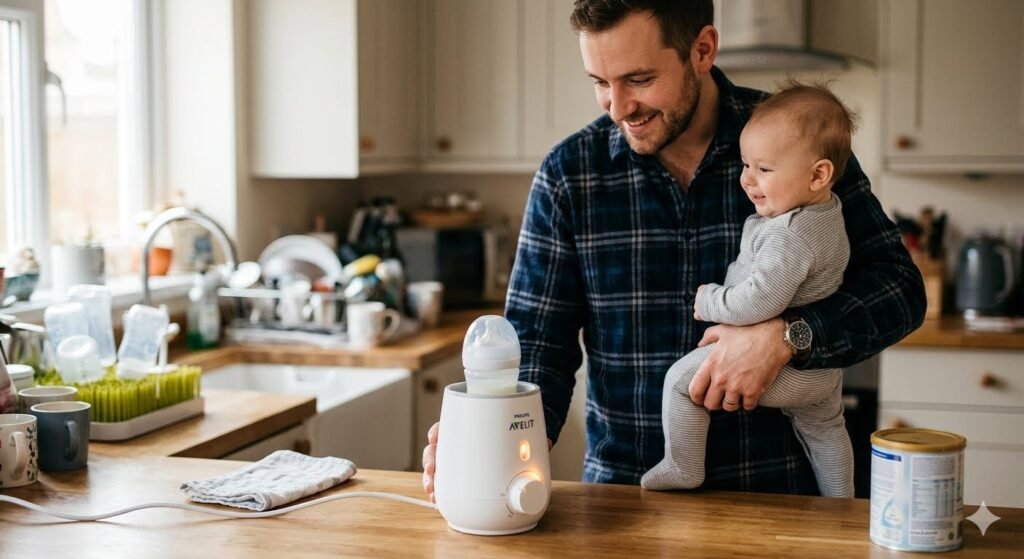
Impatience often pushes exhausted parents toward the microwave, even when they know better, which is exactly the gap a baby bottle warmer is built to close. That single shortcut is the one the CDC warns against most directly, since microwaving creates hot spots that can burn a baby’s mouth and throat.
What a Baby Bottle Warmer Actually Solves
Modern devices aren’t about convenience for its own sake. Good ones target the exact medical concerns above.
Even heating. Water vapor or low, steady heat elements reduce the hot-spot problem that water baths and microwaves both create.
Auto shut-off. Preset temperatures remove guesswork, so a half-asleep parent can’t accidentally overheat a bottle.
Consistency across feeds. This matters since babies often feed six to eight times daily, and repeated uneven heating adds up.
Faster warm-up. Shorter wait times reduce the exact stretch of crying-baby panic that pushes people toward risky shortcuts.
If you want to compare real options, our best electric bottle warmer picks break things down by speed, price, and ease of cleaning.
Choosing the Right Method for Your Routine
Every family’s feeding rhythm looks different, so think through your own situation first. Ask yourself a few honest questions.
How many nighttime feeds are you handling? Frequent overnight wake-ups often make a fast, hands-off warmer worth the investment. Similarly, if you’re pumping and bottle-feeding together, a consistent warming method saves real time across the day.
Do you travel often, or lack easy outlet access? A simple warm-water bowl might still serve you well in those moments, and a travel-friendly bottle warmer can bridge the rest. Therefore, the “right” choice depends on your life, not a universal rule.
The Emotional Weight Behind Bottle Temperature
Here’s what no one tells new parents: this anxiety isn’t really about degrees. It’s about control, in a season where so much feels uncontrollable.
You can’t control the sleep you’re missing. You can’t always control the crying. But you can control whether that bottle is safe and ready, so this small task carries outsized emotional weight.
A reliable baby bottle warmer removes one more variable from an already unpredictable life. It’s the difference between dread at the counter and quiet confidence that you’ve handled this part, one warmed bottle at a time.
Building Out Your Feeding Setup
Temperature control is just one piece of a bigger feeding puzzle. Pair it with the right routine, and mealtime gets calmer fast.
If you’re still deciding how to feed your baby, our guide on choosing your feeding path covers breast, bottle, pump, and combo options without judgment. Formula families may also want our formula guide for healthy growth, since prep and warming go hand in hand.
For hygiene basics, our baby bottle sterilizer guide pairs well with warming routines, since clean and correctly-warmed bottles work together. And our full New Mom’s Ultimate Feeding Guide ties hygiene, formula, and warming into one resource.
The Bottom Line
Temperature control sits at the intersection of safety and sanity. A dependable baby bottle warmer protects your baby’s delicate feeding needs, and it protects your own limited energy too. Choose the method that fits your season, and trust that a calmer 2 a.m. feeding is possible.
Sources: FDA – Food Safety for Moms-to-Be | CDC – Infant Formula Preparation and Storage
Written by Fran & Fabio, founders of New Mom Choice. Fran is a dentist. Fabio is a retired agricultural pilot. Together, they research and fact-check every guide on this site against trusted medical sources — including the AAP and WHO — before it goes live.